
Aadhaar eKYC, the electronic Know Your Customer process built on it, is one of the most widely used digital identity verification methods in the world by volume. It supports everything from bank account opening to mobile connections.
This article covers the importance of identity verification, how Aadhaar eKYC actually works, the difference between Aadhaar authentication and Aadhaar eKYC, and where it fits into a compliant onboarding process.
Why Identity Verification Is No Longer Optional
Identity verification has quietly become the load-bearing wall of digital trust. Every account opened, payment made, or service accessed online rests on an implicit answer to one question: is this person who they claim to be?
As that question moves from a compliance checkbox to a strategic concern, businesses face a genuine tension — regulators expect increasingly rigorous checks, while customers expect onboarding to take seconds, not days.
The organisations getting this right treat identity verification not as friction to be minimised or a box to be ticked, but as a foundation to be engineered:layering document checks, government data sources, and biometric confirmation so that trust is established quickly without being established carelessly.
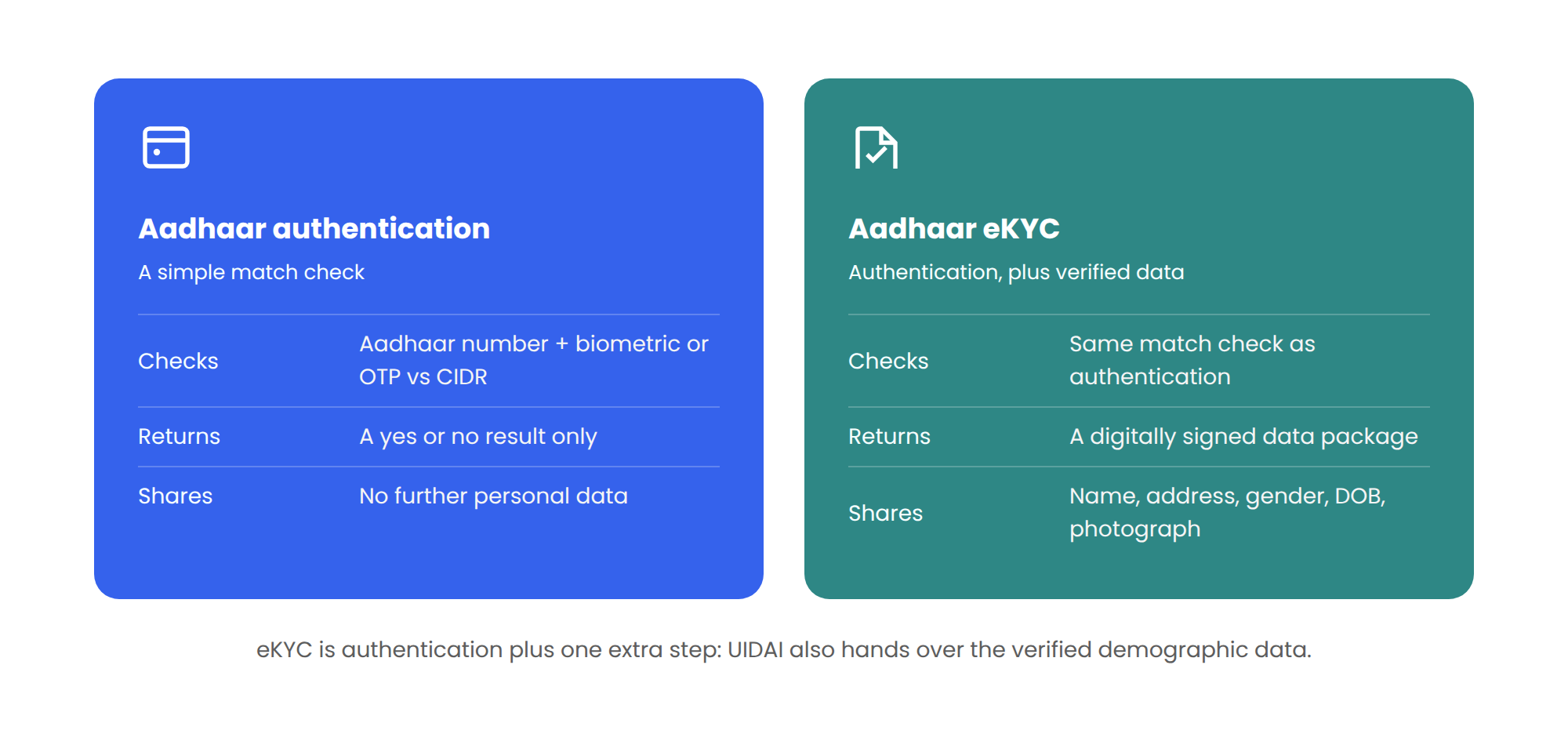
Aadhaar Authentication vs Aadhaar eKYC
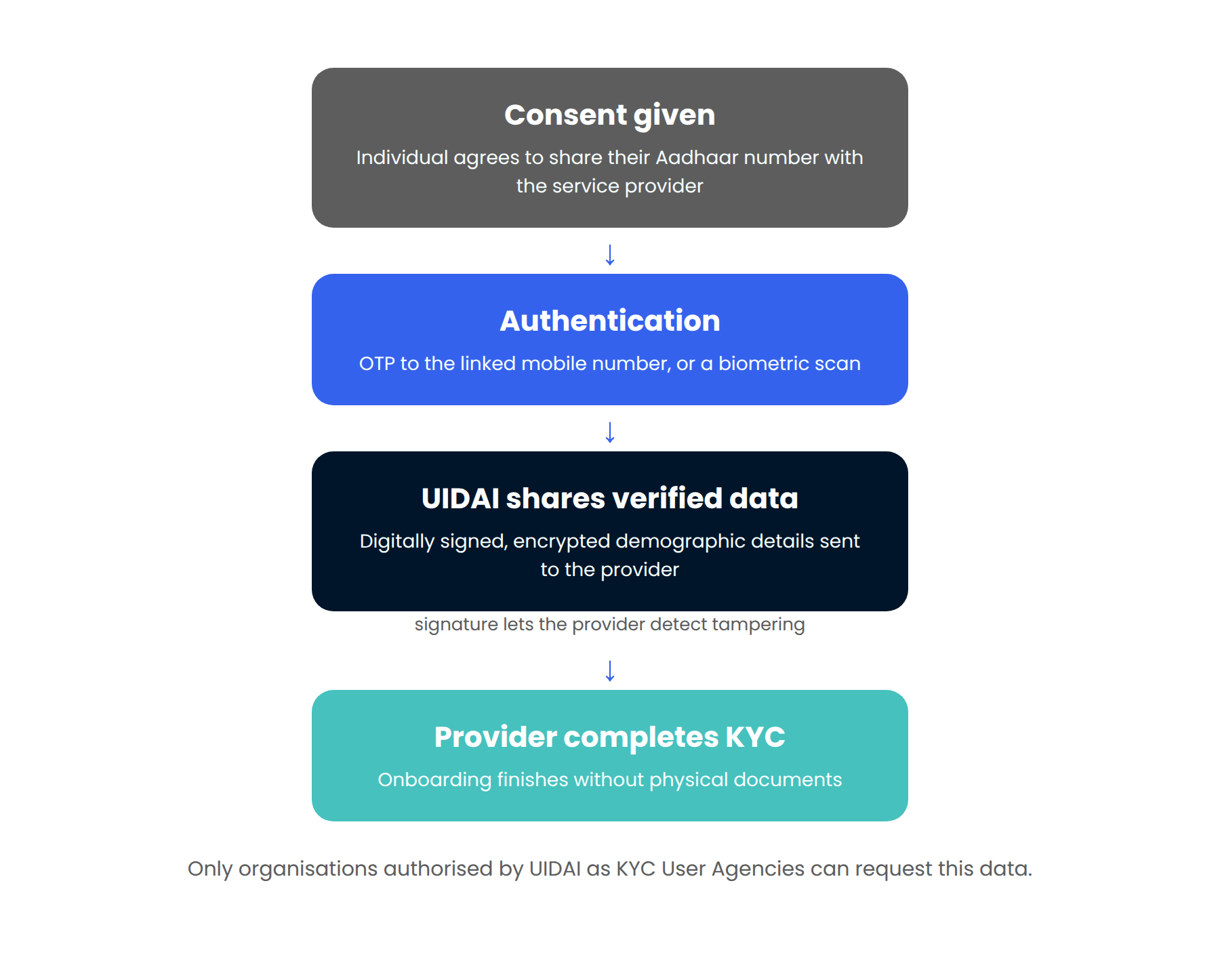
How the Aadhaar eKYC Process Works
A typical online Aadhaar eKYC journey follows this sequence:
Online vs Offline Aadhaar Verification
Most Aadhaar eKYC is completed online, using an OTP or biometric authentication through an authorised service provider. UIDAI also offers an offline, paperless option. A resident can download a digitally signed XML file or generate a QR code directly from the UIDAI portal or the mAadhaar app, and share that with a service provider. This avoids exposing the full Aadhaar number or completing a live biometric or OTP check at that moment.
Who Can Use Aadhaar eKYC?
Only organisations and agents authorised by UIDAI — known as KYC User Agencies — can carry out Aadhaar eKYC verification. This keeps access to Aadhaar-linked personal data restricted to vetted entities under UIDAI’s regulatory oversight, rather than open to any business.
Why Aadhaar eKYC Matters for Identity Verification in India
UIDAI has already collected and verified biometric and demographic data during Aadhaar enrolment. eKYC lets a service provider draw on that pre-verified information, instead of independently checking multiple physical documents like separate proof of identity and proof of address.
- This speeds up onboarding for banks, telecom operators, and other regulated entities
- UIDAI’s role as an authoritative source supports the integrity of the verification
- The digital signature on the shared data lets receiving organisations detect tampering
Ready to Strengthen Your Identity Verification Approach?
NameScan’s ID Verification service lets businesses confirm a customer’s identity in minutes, checking submitted documents against issuing-authority data and, where required, matching a live facial scan against the government-issued ID on file.
Customers can complete the check themselves via a personalised SMS or email link, with results delivered straight to a dashboard making it a practical way to strengthen KYC and AML compliance without adding manual review overhead.
0 Comments