
A threshold transaction report (TTR) must be submitted to AUSTRAC when a designated service you provide involves a transfer of physical currency of A$10,000 or more, or the foreign currency equivalent. AUSTRAC’s factsheet for Tranche 2 businesses says the report must be lodged within 10 business days after the day of the transaction. The obligation depends on the amount and the form of payment, not on whether anything looks suspicious.
This guide explains when a TTR applies, how it differs from a suspicious matter report, what to watch for with split payments, and how to build cash handling into your process. It is general information, not legal advice.
When a threshold transaction report is required
The AML/CTF Act defines a threshold transaction as including a transaction involving the transfer of physical currency, where the total amount of physical currency transferred is not less than $10,000. Physical currency means coins and printed money, Australian or foreign. The test therefore turns on three points:
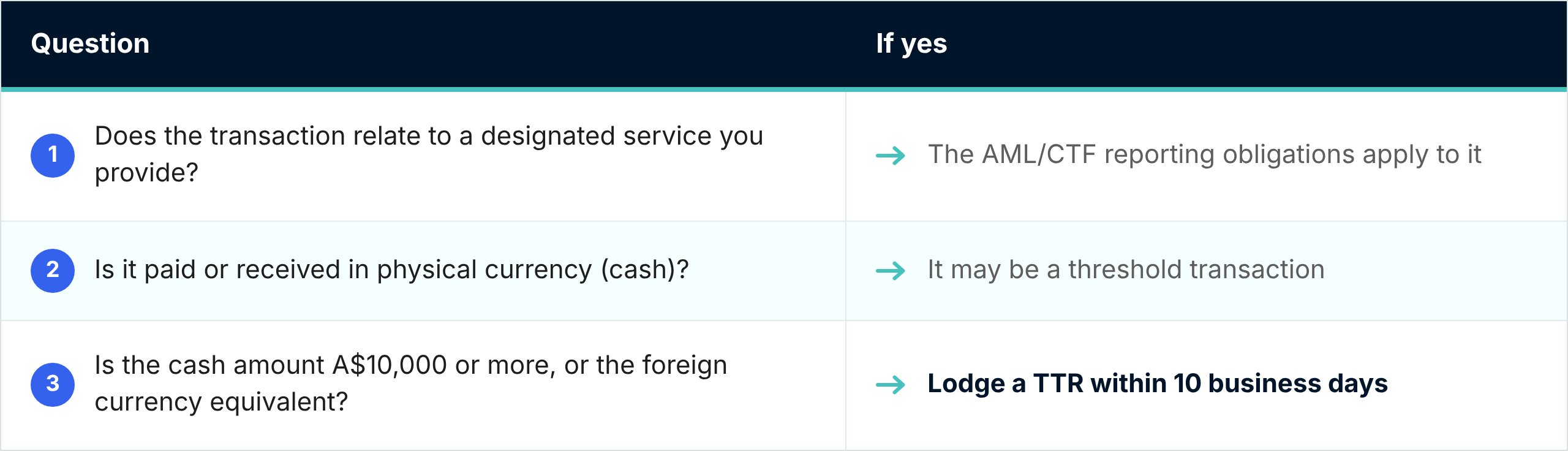
Bank transfers and card payments are not physical currency, so they do not trigger a TTR under this test on their own. Other reporting obligations, and your suspicious matter reporting duty, still apply to them.
How a TTR differs from a suspicious matter report
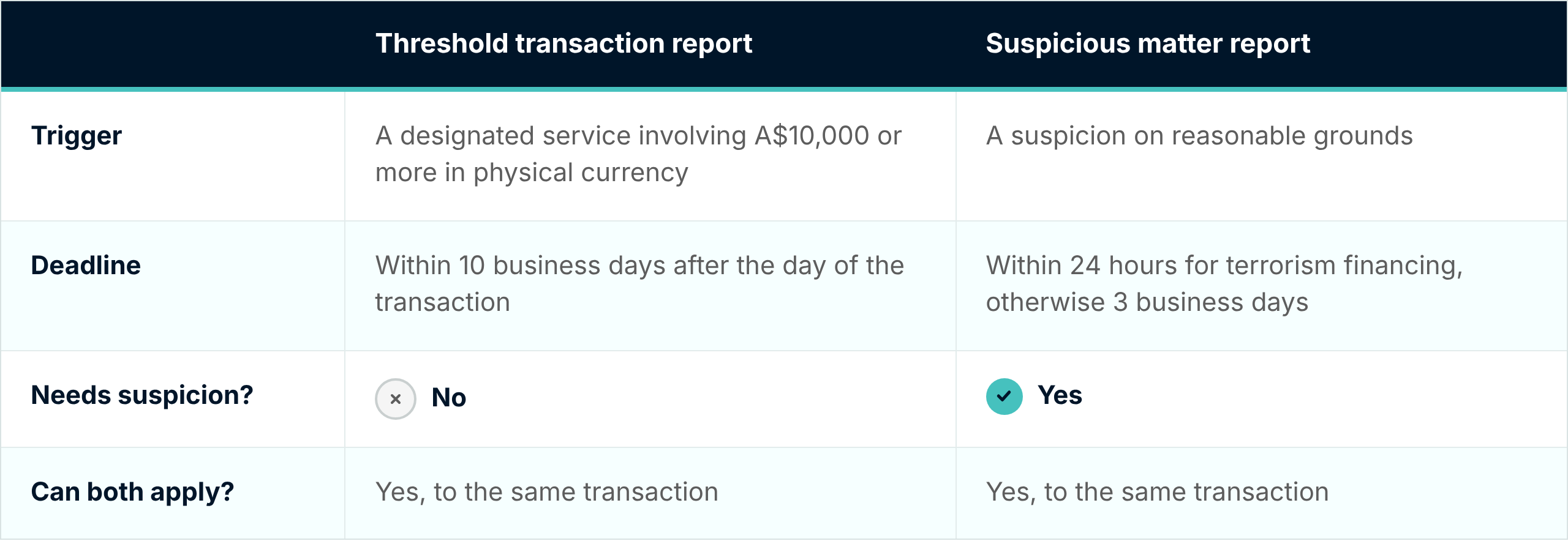
A large cash payment from a client with a clear, documented reason may need a TTR and nothing more. The same payment from a client who cannot explain where the cash came from may need both.
Watch for split payments
Some people try to avoid the threshold by splitting a large cash amount into smaller payments. The AML/CTF Act makes it an offence to conduct transactions so as to avoid the threshold transaction reporting requirements. If a client offers to pay $18,000 as two cash payments of $9,000 on different days, or asks how much cash you can accept without a report, treat it as a warning sign and consider whether a suspicious matter report is required.
How to lodge a TTR
TTRs are lodged with AUSTRAC through AUSTRAC Online, using the account your business set up when it enrolled. AUSTRAC added guidance on how to submit threshold transaction and suspicious matter reports from 1 July 2026. Keep the report and the transaction records with your other AML/CTF records.
HANDLING A LARGE CASH PAYMENT
The amount triggers the report. The circumstances decide whether more is needed.
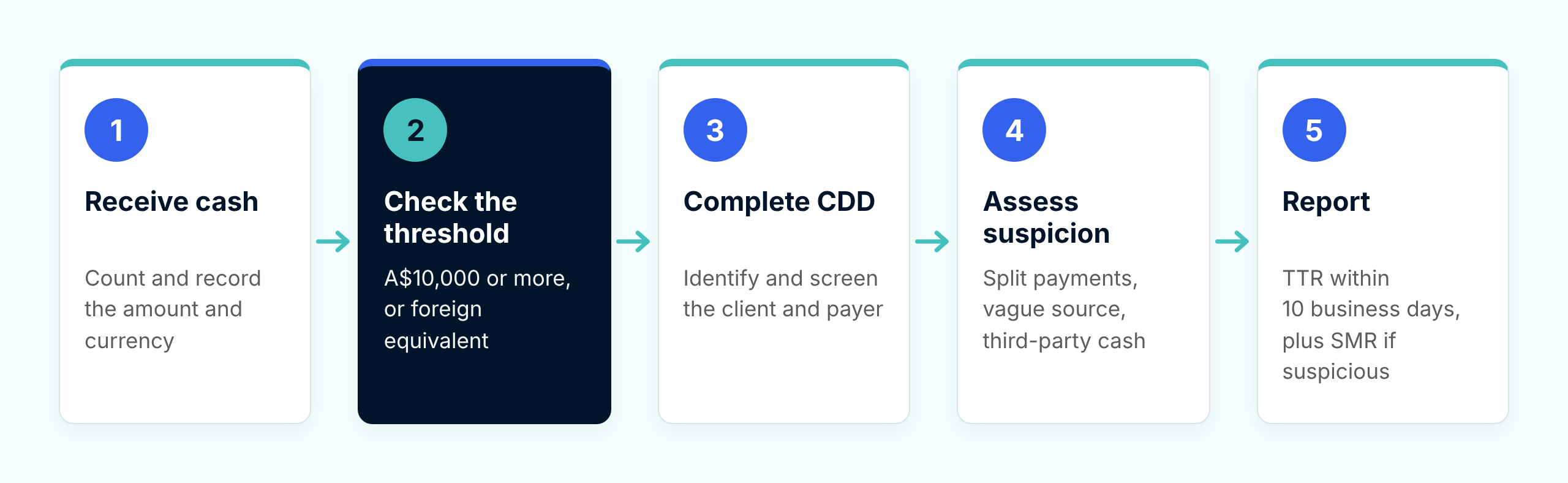 Figure 1. Illustrative cash-handling workflow. Your AML/CTF program sets the detail.
A separate rule for cash crossing the border
Do not confuse TTRs with cross-border movement reports. AUSTRAC’s Tranche 2 factsheet notes a separate reporting obligation where physical currency or bearer negotiable instruments of A$10,000 or more are carried or sent into or out of Australia, including a report within five business days when you receive such an amount from outside Australia.
Building cash handling into a small firm
- Decide your cash policy. Some firms choose not to accept large cash payments at all. If you do accept them, write down who can and how they are recorded.
- Train front-desk staff. The person who receives the cash needs to know the threshold and the warning signs.
- Record every large cash receipt. Date, amount, currency, client, payer and the service it relates to.
- Check who is paying. Cash from a third party, rather than your client, deserves a closer look.
- Diarise the deadline. Ten business days passes quickly around public holidays.
A worked example
Illustrative example. A real estate agency receives a $15,000 cash deposit from a buyer for a property sale. The deposit relates to a designated service and exceeds the threshold, so the agency lodges a TTR within 10 business days. Because the buyer explains the cash came from the sale of a car and provides the sale contract, the agency records the explanation and no suspicious matter report is needed. If the buyer had instead offered to bring the cash in three smaller amounts on different days, the agency would also consider an SMR.
Frequently asked questions
What is the threshold for a threshold transaction report?
A$10,000 or more in physical currency, or the foreign currency equivalent, as part of a designated service.
How long do I have to lodge a TTR?
AUSTRAC’s factsheet says within 10 business days after the day of the transaction.
Does a bank transfer of $10,000 need a TTR?
Not under the physical currency test. TTRs relate to cash. Your other obligations, including suspicious matter reporting, still apply.
Do I need a TTR if the client is not suspicious?
Yes. The TTR depends on the amount and form of payment, not on suspicion.
What if a client splits a cash payment to stay under $10,000?
Deliberately splitting transactions to avoid the reporting requirement is an offence under the AML/CTF Act, and it is a warning sign you should assess for a suspicious matter report.
How NameScan can help
Large cash payments call for confidence about who you are dealing with. NameScan lets small firms screen clients and payers against PEP, sanctions and adverse media data on a pay-as-you-go basis and record a decision for each result, so your file shows the checks behind every reportable transaction.
Know who is paying before the cash changes hands
Screen clients and third-party payers and keep a dated record alongside your TTRs.
0 Comments