
Australian sanctions laws make it an offence to make an asset available, directly or indirectly, to or for the benefit of a designated person or entity, and to deal with assets they own or control. Those rules apply to payments to suppliers, contractors, landlords and agents just as much as to clients. Sanctions screening suppliers and other third parties is how a small business shows it has taken reasonable precautions.
This guide explains why third parties matter, who to screen, when, and what to do with a match. It is general information, not legal advice. DFAT recommends seeking independent legal advice on sanctions questions.
Why sanctions laws reach your suppliers
DFAT’s guidance explains that under Australian sanctions laws it is an offence to make an asset available, directly or indirectly, to a designated person or entity, or to use or deal with an asset they own or control. ‘Asset’ is broad, and includes money. Paying an invoice is making money available to the payee.
These laws apply to every business in Australia, whether or not it is an AUSTRAC reporting entity. For companies, sanctions offences are strict liability, so a company can be found guilty without proof that it knew. It is a defence to show that the company took reasonable precautions and exercised due diligence to avoid the contravention.
DFAT describes reasonable precautions and due diligence as a relative standard that depends on the size and nature of the business, the complexity of transactions and the countries involved, and gives examples such as robust internal controls, screening transactions and parties against the Consolidated List, and staff training.
Who to screen
| Third party | Why it matters | Example |
| Suppliers and contractors | You pay them | An overseas IT contractor or translation service |
| Agents and intermediaries | They act for you or receive funds | A referral agent paid commission |
| Landlords and tenants | Rent flows to or from them | A tenant company in a commercial property you manage |
| Payees nominated by clients | Money leaves your trust account to them | A client asks you to pay settlement funds to a third party |
| Counterparties in a transaction | You may hold or move their assets | The other side of a business sale |
| Staff | Wages are assets made available to them | A new hire in an AML/CTF role |
Screen companies as well as individuals, and remember that a company that is not itself listed can still be owned or controlled by a designated person.
When to screen third parties
- At onboarding. Before you add a supplier or contractor to your payment system.
- Before the first payment. Especially for overseas or one-off payees.
- When details change. New bank account details, a new country, a change of ownership or a new trading name.
- Before large or unusual payments. Where the amount or route is out of pattern.
- Sanctions listings change often, so re-screen active suppliers on a schedule that suits their risk.
SANCTIONS SCREENING FOR SUPPLIERS AND PAYEES
Screen before money moves, and again when something changes.
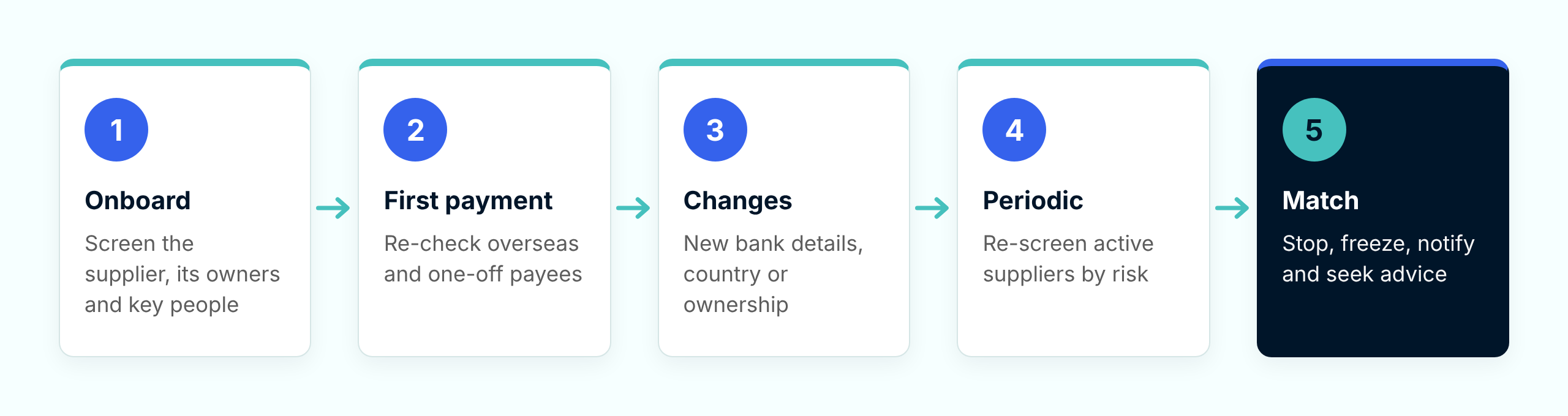 Figure 1. Illustrative third-party sanctions screening workflow for a small business.
What to do if a third party matches
Treat a third-party match exactly as you would a client match. Confirm whether it is a true match using the identifiers available. If it is, or you cannot rule it out, do not make the payment or deal with the asset. If you hold an asset owned or controlled by the designated person, freeze it and notify the Australian Sanctions Office and the Australian Federal Police as soon as possible, then seek legal advice. Our guide to DFAT Consolidated List matches sets out the steps.
If you are an AUSTRAC reporting entity, AUSTRAC says that if you suspect on reasonable grounds that you have information relevant to a contravention of Australia’s sanctions laws, you must also submit a suspicious matter report.
Sanctions risks that screening does not cover
Screening names is only part of sanctions compliance. Australian sanctions measures can also prohibit certain supplies and services to sanctioned countries or sectors, even where nobody involved is on a list. If your business supplies goods or services overseas, check DFAT’s guidance on the sanctions regimes that apply to the countries involved.
A worked example
Illustrative example. A small accounting practice engages an overseas bookkeeping contractor. Before the first payment, it screens the contractor’s company and its director, and the director returns a potential sanctions match. The identifiers do not rule the match out, so the practice holds the payment, takes legal advice and contacts the Australian Sanctions Office before deciding how to proceed. It records each step on file.
Frequently asked questions
Do sanctions laws apply to my suppliers if I am not regulated by AUSTRAC?
Yes. Australian sanctions laws apply to every business in Australia, and to every dealing, not just to customers.
Is screening suppliers a legal requirement?
DFAT does not prescribe a single method, but it describes screening parties and transactions against the Consolidated List as an example of the reasonable precautions and due diligence that can support a company’s defence.
How often should I re-screen suppliers?
Set a schedule that suits each supplier’s risk, and re-screen when bank details, ownership or country change. Sanctions listings change often.
What if a supplier’s owner is sanctioned but the supplier is not?
You may still be dealing with assets owned or controlled by a designated person. Pause, assess ownership and control, and seek advice.
Do I need to screen staff?
It is a sensible step, because paying wages to a designated person would involve making assets available to them.
How NameScan can help
NameScan lets businesses screen suppliers, contractors and other third parties, both individuals and companies, against global sanctions lists on a pay-as-you-go basis, singly or in batches, and record a decision on each result. Each result shows the official lists a profile appears on.
Screen before you pay
Check suppliers, contractors and payees against sanctions lists and keep a dated record of each decision.
0 Comments