
The rise of deepfake technology has created unprecedented challenges for identity verification systems worldwide. As artificial intelligence advances, distinguishing between genuine identity claims and sophisticated synthetic media becomes increasingly difficult.
This guide explores the intersection of identity verification and deepfakes, examining current threats, emerging solutions, and strategic approaches organisations can implement.
Understanding Deepfake Technology and Its Implications
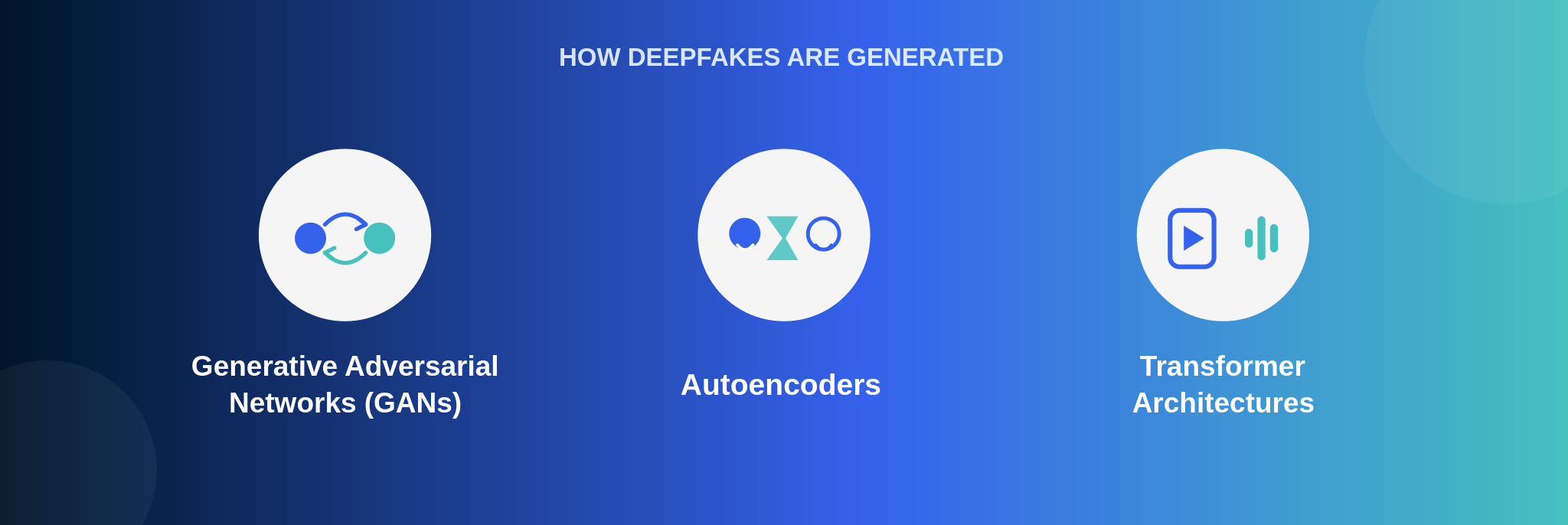
Deepfakes are synthetic media generated through deep learning algorithms. The main generation techniques include:
- Generative adversarial networks (GANs) — two competing neural networks that refine synthetic output until it passes as genuine
- Autoencoders — models that learn to compress and reconstruct facial data, enabling face-swapping
- Transformer architectures — increasingly used for higher-fidelity video and voice synthesis
These systems analyse thousands of images to learn facial patterns, expressions, and movements. Then map features onto source videos to create realistic composites. Voice synthesis technology works similarly, replicating speech patterns and tonal qualities from audio samples.
The accessibility of deepfake tools has democratised this capability far beyond research laboratories. Open-source projects and mobile applications enable individuals to generate convincing synthetic media within minutes. Criminals exploit this capability for phone-based fraud, impersonating executives to authorise fraudulent transfers or tricking customer service representatives.
The Identity Verification Threat Landscape
Identity verification systems face attacks at multiple stages of the authentication process:
- At enrolment — bad actors use deepfakes to create synthetic identities or hijack legitimate identities
- At liveness detection — the check designed to confirm a real person is present can be defeated through high-quality deepfake presentations, or bypassed entirely through sophisticated injection attacks that feed fabricated video directly into the verification pipeline rather than through a camera
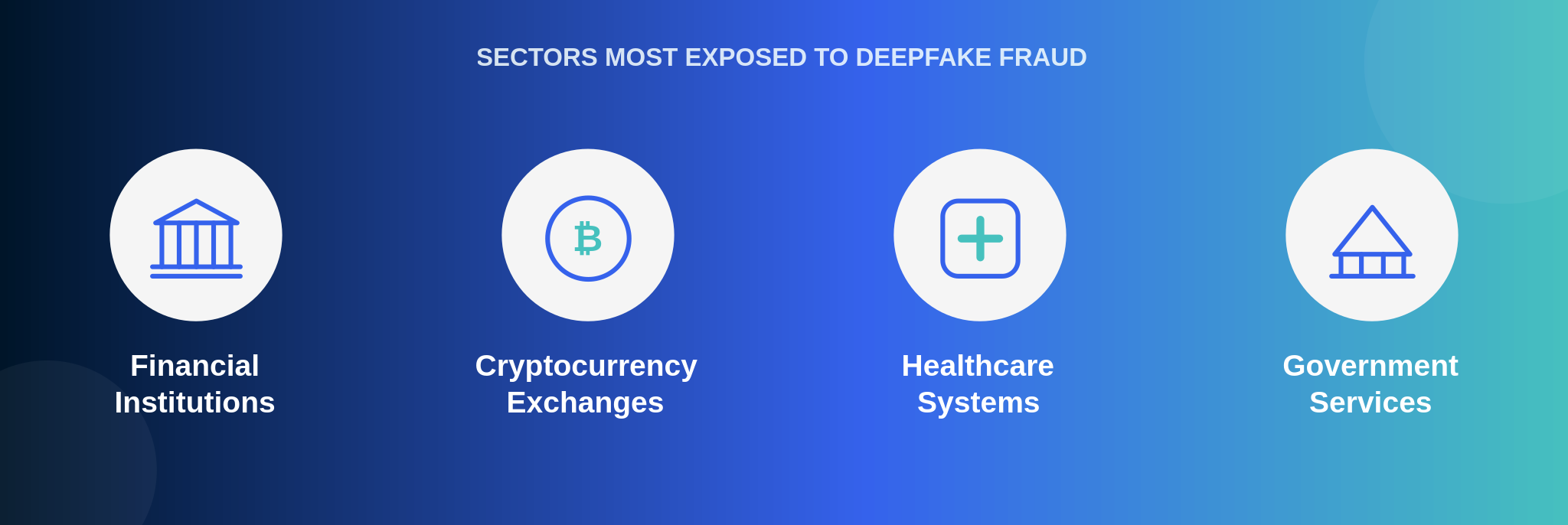
The sectors most exposed differ in what makes them attractive targets:
- Financial institutions — particular vulnerability given their reliance on remote identity verification; criminals have successfully used deepfakes to bypass video-based KYC checks, opening bank accounts and laundering proceeds through compliant institutions
- Cryptocurrency exchanges — face similar challenges to financial institutions, often with less mature verification infrastructure
- Healthcare systems — attractive targets due to the sensitive nature of medical records and the high value of medical identities on underground markets
- Government services — tax administration, social benefits, and immigration processing all face risk from sophisticated identity fraud enabled by synthetic media
Deepfake Detection Technologies
At an industry level, deepfake detection generally combines two things: forensic scrutiny of the media itself, and confirmation that a genuine, physically present person completed the verification.
Building the first from scratch is a specialised undertaking that few organisations attempt directly, and it has to keep evolving as generation techniques improve. The more widely deployed and practical control is the second: pairing document verification with liveness detection at the point identity is established.
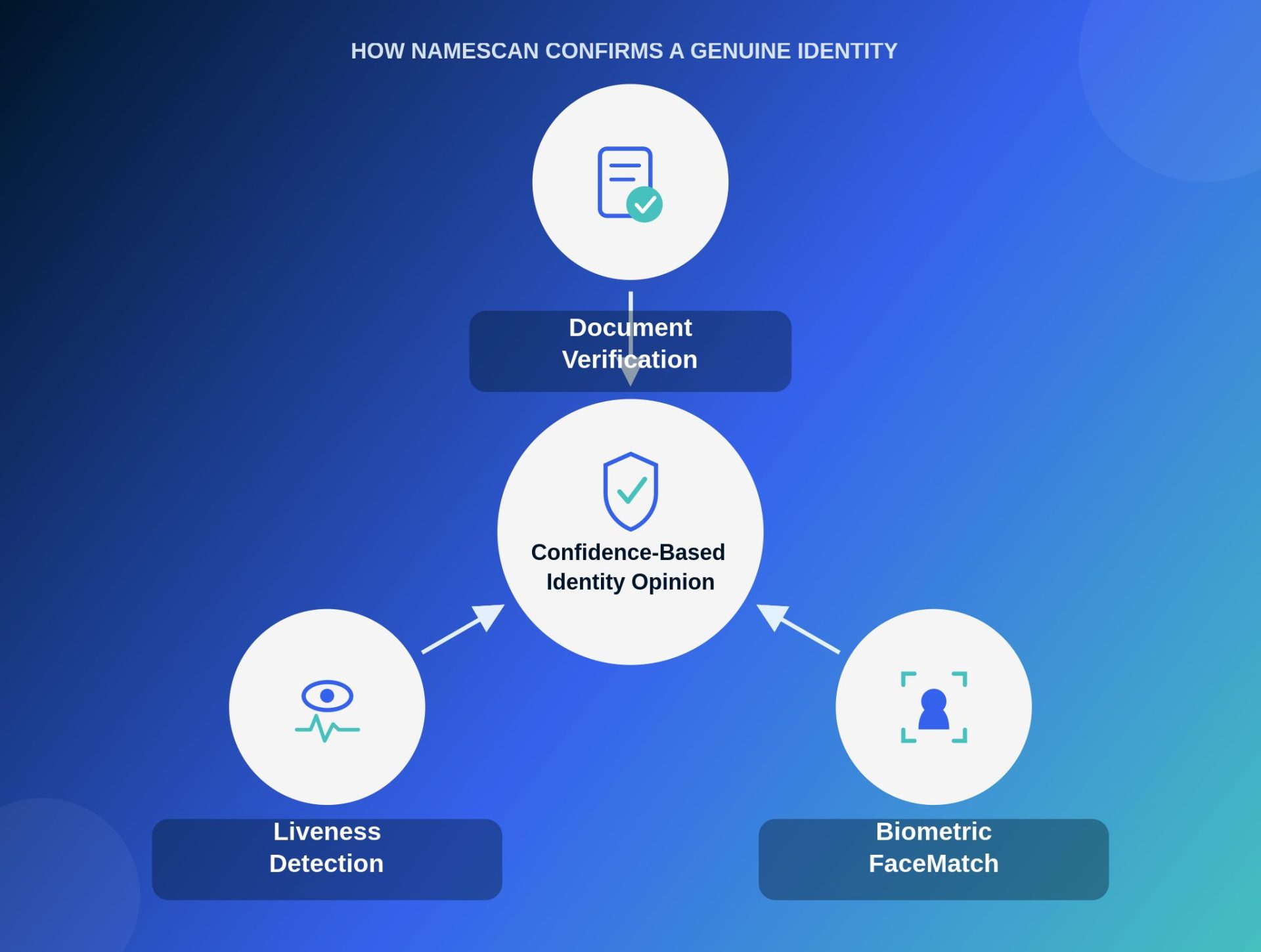
NameScan’s identity verification stack is built on exactly this approach:
- Document verification — checks a submitted passport, driver’s licence, or other government-issued ID against official and commercial sources, confirming the document itself is genuine and valid. Coverage spans Australia and a growing list of international markets, expanding toward 60+ countries as rollout continues.
- Biometric facial verification (FaceMatch) — matches a live selfie against the photo on the verified document.
- Liveness video detection — confirms a real, physically present person completed the biometric step, and is specifically designed to block attempts to bypass verification using a photo, screen replay, or synthetic video rather than a live presence.
Best Practices for Organisations
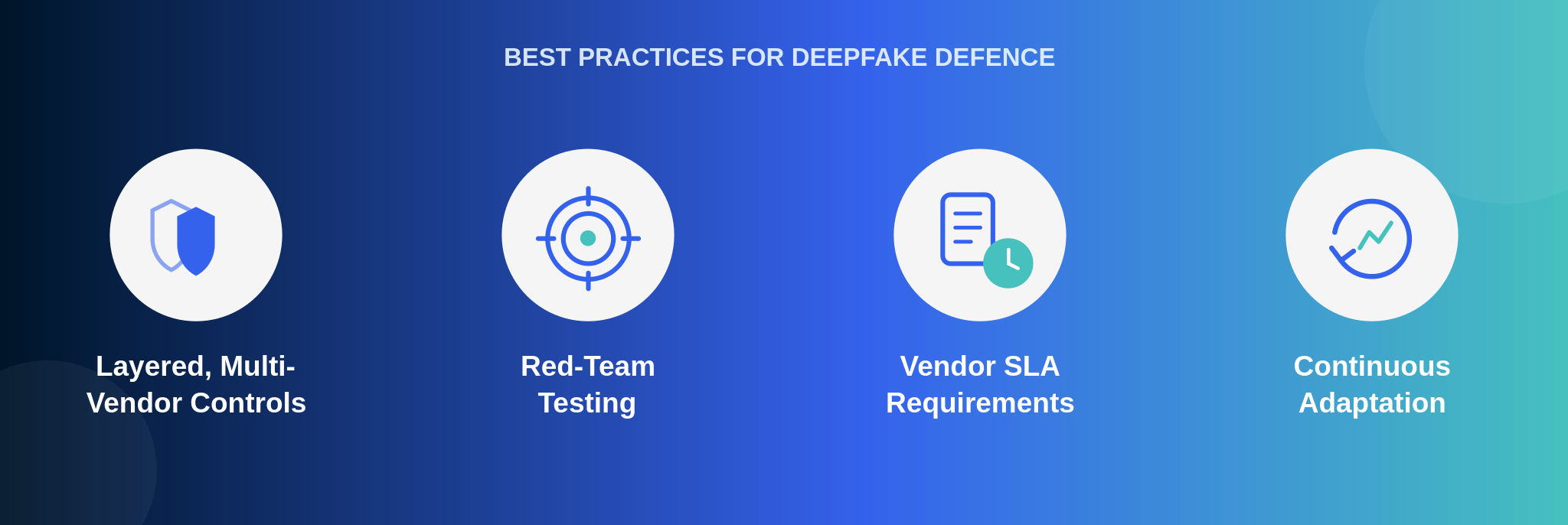
Effective deepfake defence requires layered security architectures where no single control represents a fatal vulnerability:
- Deploy multiple independent verification mechanisms spanning different technologies and vendors — this diversity ensures that attacks defeating one layer face additional barriers before achieving their objectives
- Run regular security assessments and penetration testing to identify weaknesses before attackers exploit them
- Conduct red-team exercises specifically targeting deepfake-based attacks to reveal how current controls would actually perform against a sophisticated adversary, rather than assuming they would
- Evaluate vendors against current and emerging deepfake threats specifically, and hold them to it — service level agreements should specify detection performance requirements and response times for emerging threat adaptation, not just uptime
Conclusion
No single detection method, whether facial boundary analysis, frequency-domain forensics, or voice biometrics, holds up against every generation technique on its own, and each becomes a specific target once attackers know it’s in use. That’s why organisations managing this risk well aren’t betting on one control.
As generation techniques keep improving, the advantage shifts to whichever organisations treat their verification stack as something to be continuously tested and rebuilt, not configured once and left alone.
Frequently Asked Questions
Can deepfakes fool facial recognition?
Yes, sometimes. A deepfake can fool a simple photo match. It struggles more against liveness checks. Liveness confirms a real person is present.
What is liveness detection?
Liveness detection confirms a real person completed a check. It blocks photos and screen replays. It also blocks synthetic video attempts.
How can I tell if a video is a deepfake?
Look for unnatural blinking or facial movement. Check for mismatched lighting or shadows. Blurring often appears around the hair or jawline. Audio may not sync with lip movement.
Can AI-generated documents pass identity verification?
Sometimes, if verification is weak. Strong systems check documents against official records. This catches fabricated or altered documents.
Is deepfake fraud illegal?
Using a deepfake to commit fraud is illegal in most places. Existing fraud and identity theft laws usually apply. Rules on creating deepfakes themselves vary by jurisdiction.
How do businesses stop deepfake identity fraud?
Most use layered checks. Document verification confirms the ID is genuine. Biometric matching confirms the face matches. Liveness detection confirms a real person is present.
For more information, explore our Knowledge Base or browse our other insights.
0 Comments