
Identity verification has become one of the most critical challenges facing organisations worldwide. As digital services expand and fraud tactics grow more sophisticated, companies must navigate complex regulatory requirements, technological threats, and user experience expectations. This guide examines key challenges in global identity verification and outlines strategic approaches organisations can implement.
Understanding the Global Identity Verification Landscape
Companies operating internationally face requirements that vary significantly across jurisdictions. Each region imposes distinct frameworks, data residency requirements, and document standards that complicate verification workflows.
Key regulatory obligations include:
- Anti-Money Laundering (AML) compliance
- Know Your Customer (KYC) mandates
- Sector-specific guidelines
- Data protection frameworks like GDPR
The shift to remote services has accelerated these challenges. Organisations must verify identities without physical documents, relying on digital channels that fraudsters actively exploit.
Key Challenges in Identity Verification
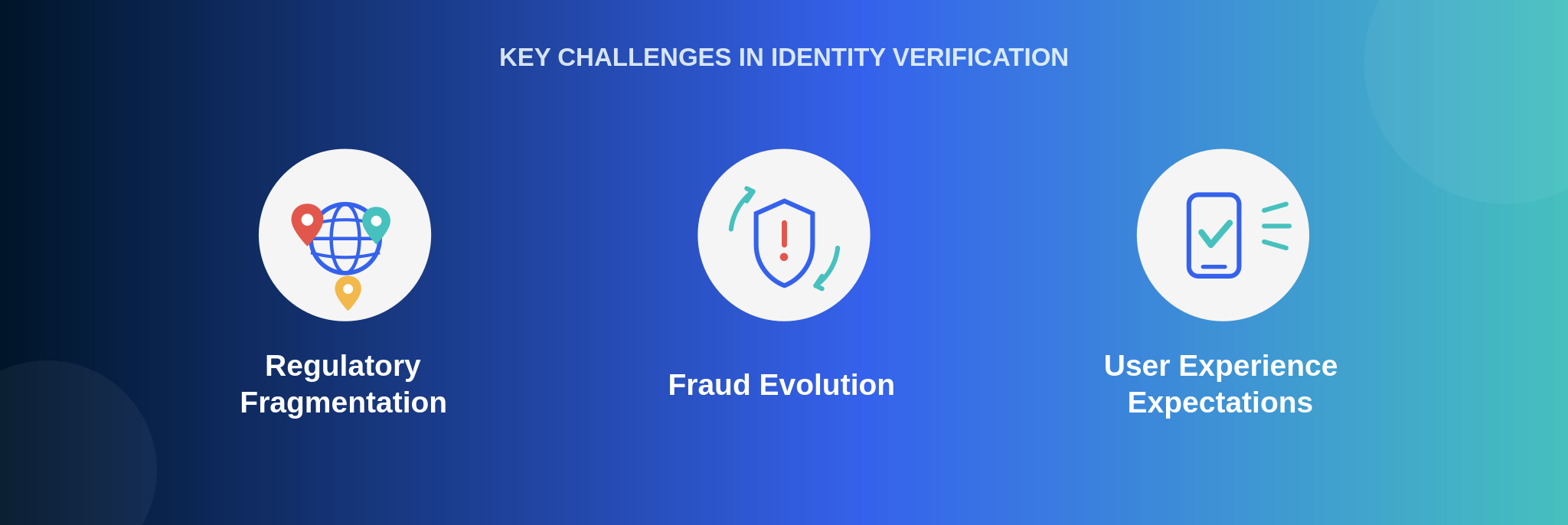
Regulatory Fragmentation
Operating across multiple jurisdictions means navigating overlapping and sometimes conflicting regulations. Key complications include:
- GDPR requirements restricting biometric data processing in Europe
- Different document format requirements by region
- Varying identity number standards
- Conflicting compliance timelines
Enhanced due diligence may be required for high-risk jurisdictions or customers.
Fraud Evolution
Fraudsters continuously adapt methods to circumvent verification systems. Synthetic identities combine real and fabricated information to create believable personas.
Document forgery threats include:
- High-quality reproductions
- Altered genuine documents
- Fabricated credentials
User Experience Expectations
Customers expect seamless verification experiences. Key considerations:
- Lengthy processes drive abandonment
- Mobile-first verification is essential
- Balance thoroughness with convenience
- Reliable performance across devices and network conditions
Strategic Approaches for Robust Verification
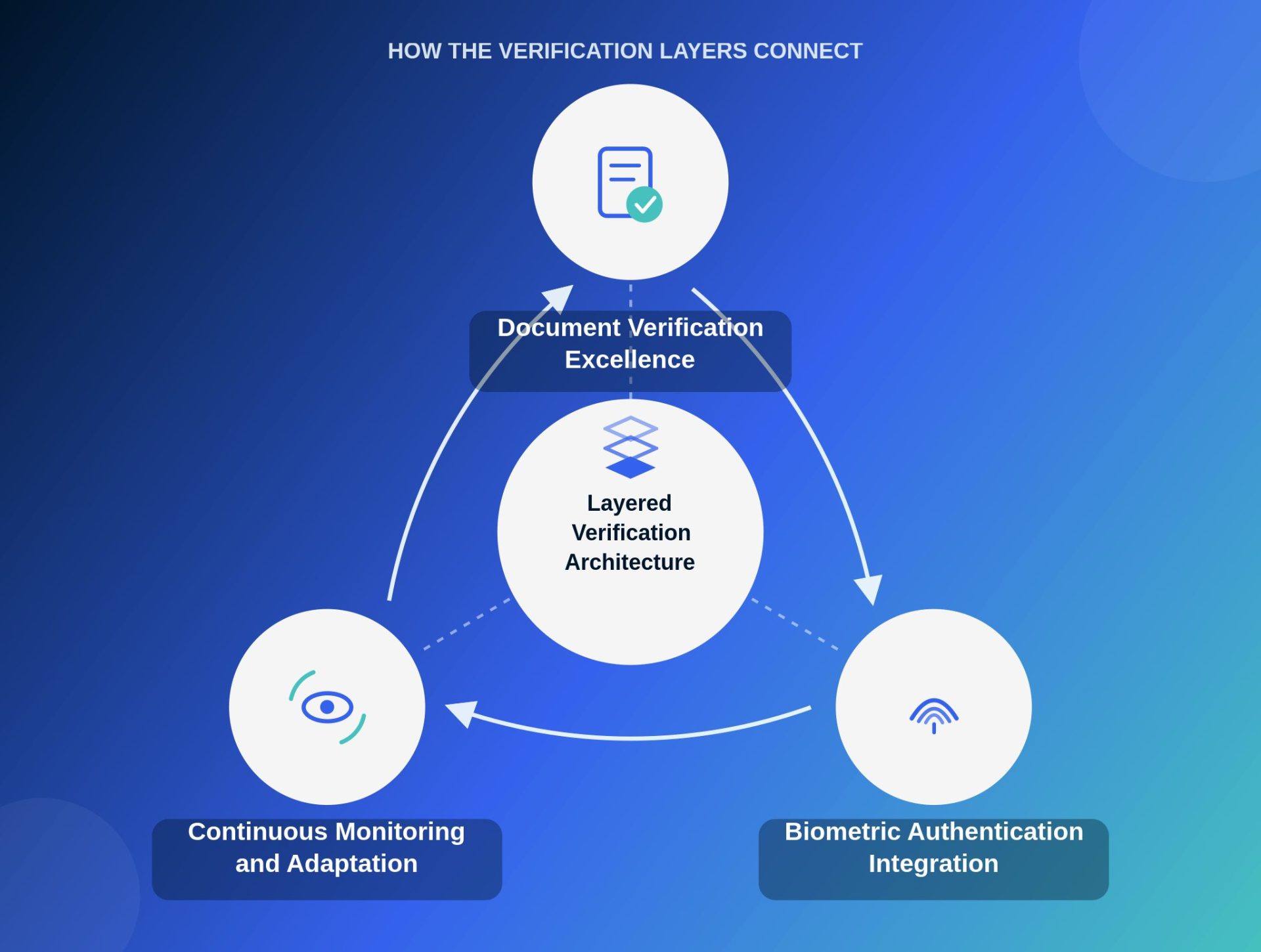
Layered Verification Architecture
Effective verification requires multiple independent controls working together. Identity verification creates defence-in-depth that fraudsters struggle to circumvent entirely.
Key components:
- Document security feature analysis
- Biometric verification
- Behavioural analysis
- Continuous monitoring
Implement risk-based verification approaches that apply appropriate scrutiny based on transaction risk.
Document Verification Excellence
Government-issued documents remain foundational. Effective systems must:
- Examine security features
- Detect forgeries
- Validate against external databases
Integration with document verification services provides access to authoritative data sources.
Biometric Authentication Integration
Biometric verification confirms physical presence through:
- Facial recognition
- Fingerprint analysis
- Voice verification
Liveness detection ensures verification involves genuine presence.
Continuous Monitoring and Adaptation
Verification should not end after onboarding. Combining KYC data with transaction monitoring helps identify suspicious activity over time.
Essential practices:
- Identify account takeover attempts
- Detect evolving fraud patterns
- Establish feedback loops with fraud intelligence
Building a Compliance Framework
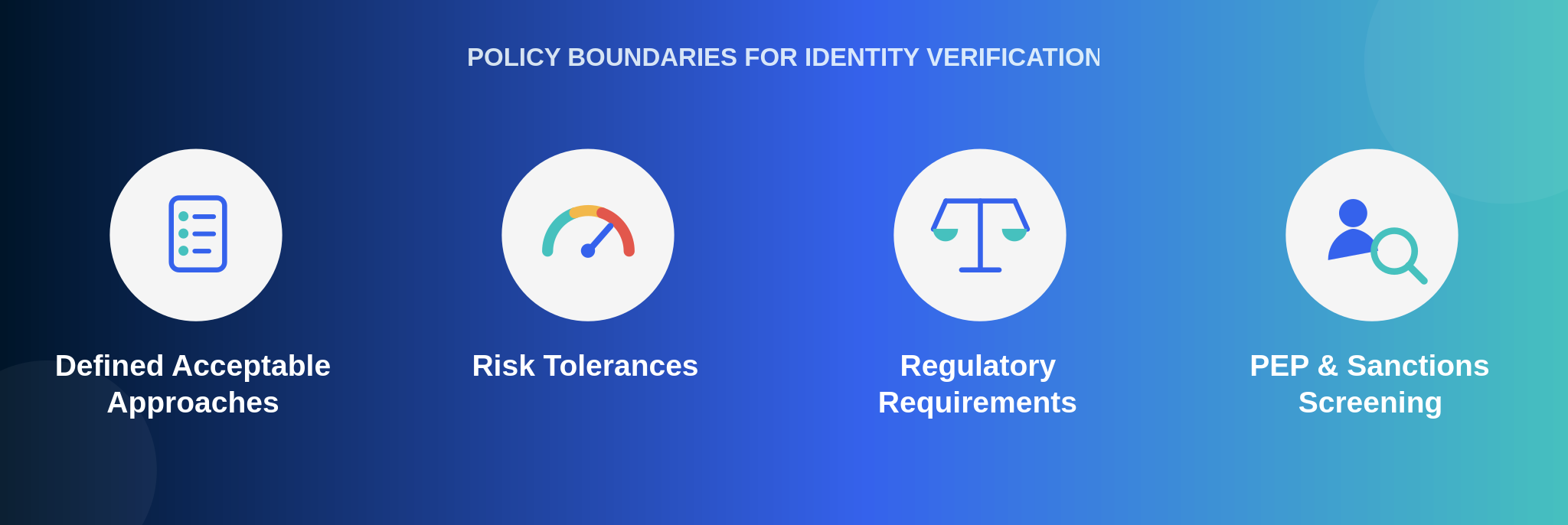
Identity verification must operate within clear policy boundaries. Key elements:
- Defined acceptable approaches
- Risk tolerances
- Regulatory requirements
- PEP and sanctions screening
Third-party risk management extends requirements to business partners and service providers. Contractual provisions should specify security requirements and audit rights.
Conclusion
Identity verification is no longer a single checkpoint at onboarding. It has become an ongoing discipline that has to keep pace with regulatory fragmentation, increasingly capable fraud, and customers who expect the process to feel almost invisible.
The organisations managing this well share one trait: they treat verification as layered architecture, not a single control. Document checks, biometric authentication, behavioural signals, and continuous monitoring each catch what the others miss, and none of them work in isolation.
That architecture only holds up when it sits inside clear policy boundaries: defined risk tolerances, mapped regulatory obligations, and PEP and sanctions screening that scales with actual risk. As fraud tactics and regulations continue to shift, the strength of a verification programme is measured less by how many controls it has, and more by how quickly those controls adapt together.
Frequently Asked Questions
What are the main challenges in global identity verification?
Key challenges include regulatory fragmentation, sophisticated fraud tactics, and maintaining user experience while applying thorough verification.
How can organisations improve their verification systems?
Implement layered verification combining documents, biometrics, and continuous monitoring. Invest in advanced detection technologies.
Why is continuous monitoring important?
Initial verification only confirms identity at one point in time. Ongoing monitoring detects account takeover attempts and emerging patterns.
How do regulations vary globally?
Regulations differ significantly across regions. GDPR restricts biometric processing in Europe while AML requirements vary between UK, EU, Asia-Pacific, and Americas.
For more information, explore our Knowledge Base or browse our other insights.
0 Comments