
Under Australia’s reformed AML/CTF Act, when your customer is a company, trust, partnership or other entity rather than an individual, its beneficial owners are the individuals who ultimately own 25% or more of it, directly or indirectly, or who control it. Before you provide a designated service, you must establish who those people are and whether any of them is a politically exposed person (PEP) or designated for targeted financial sanctions. Beneficial ownership verification means following the chain of ownership until you reach real people, checking control as well as shares, and recording what you did.
This article was first published in May 2026 and has been rewritten for the reformed rules that apply to Tranche 2 businesses from 1 July 2026. It is general information, not legal advice.
The two tests in the AML/CTF Act
The Act gives two separate ways to be a beneficial owner:
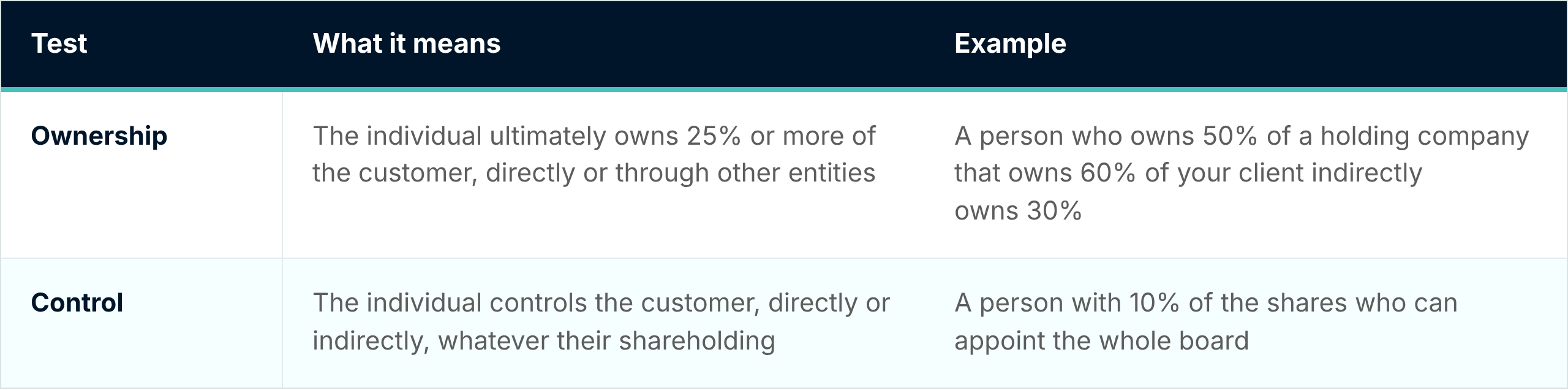
Both tests apply. A person can be a beneficial owner through control alone, and a company can have several beneficial owners or, in some structures, none who meet the ownership test.
What initial customer due diligence requires
For a body corporate, partnership or unincorporated association, AUSTRAC’s guidance says you must establish, among other matters, the identity of the customer, the identity of any beneficial owners, the identity of anyone acting on its behalf and their authority to act, and whether any of those individuals is a PEP or designated for targeted financial sanctions.
AUSTRAC’s guidance also lists certain customers, including government bodies, where you do not need to identify beneficial owners and are taken to have established their PEP and sanctions status. Check AUSTRAC’s customer-type guides for the full list before relying on an exception.
VERIFYING BENEFICIAL OWNERS STEP BY STEP
Follow the chain to real people, then verify and screen them.
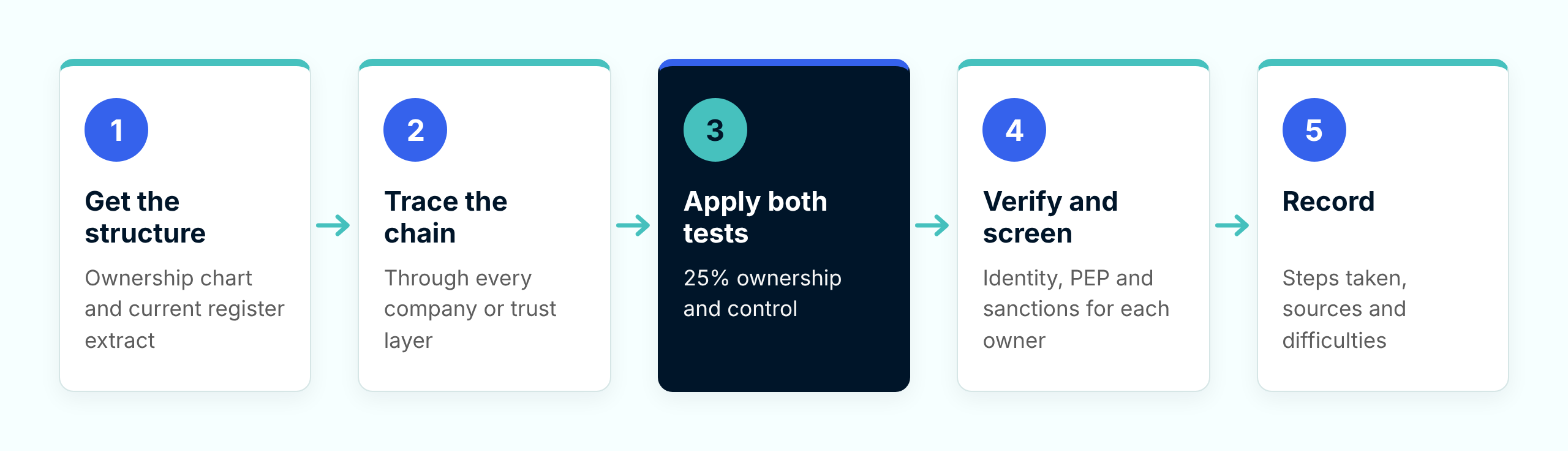 Figure 1. Illustrative beneficial ownership verification workflow for a company client.
A step-by-step approach for a private company
- Ask for the structure. Request a simple ownership chart showing every layer up to individuals, and the names of anyone with special rights, such as board appointment powers.
- Check the public record. An ASIC company extract confirms the company’s details, officeholders and registered shareholders. Remember that a registered shareholder may hold shares for someone else.
- Trace every layer. If a shareholder is another company or a trust, repeat the exercise for that entity until you reach individuals.
- Calculate indirect ownership. Multiply holdings through each layer and add up holdings that reach the same person by different routes.
- Apply the control test. Look at board appointment rights, voting agreements, nominee arrangements and anyone who directs the business without a formal title.
- Verify each beneficial owner’s identity. Use reliable and independent documents or data, at a level that suits the customer’s risk.
- Screen each beneficial owner. Establish whether any of them is a PEP or designated for targeted financial sanctions, and consider adverse media where your program requires it.
- Record what you did. Keep the chart, register extracts, calculations, verification and screening results with the client’s CDD records.
Trusts follow their own rules
For a trust, AUSTRAC’s guidance says beneficial owners may include individual trustees, the individual beneficial owners of corporate trustees, settlors, appointors, guardians, protectors, any other individual with control over the trust and, in some cases, beneficiaries. Work through the trust deed and any variations, and treat a corporate trustee as a company in its own right.
When you cannot identify a beneficial owner
Sometimes the answer cannot be found, for example where an overseas holding company will not disclose its shareholders. AUSTRAC’s guidance says that for a body corporate, partnership or unincorporated association, you are taken to have established this matter if, among other conditions, you have taken all reasonable steps to establish the identity of any beneficial owners and recorded the steps taken and any difficulties you encountered. Check AUSTRAC’s guidance for the full conditions, and treat the difficulty as a risk factor in your rating.
That fallback is for genuine difficulty. A client who simply refuses to tell you who owns them is a different situation, and may mean you cannot provide the service.
Is there a public beneficial ownership register?
Not for most companies yet. Australia does not currently have a central register of beneficial owners for unlisted companies. The government has announced plans for a Commonwealth-operated public register for unlisted entities, with policy work continuing and public consultation expected to follow. Separately, ASIC has made rules for enhanced beneficial ownership disclosure by listed entities, which start on 4 December 2026.
Until a register exists, the ASIC company register shows registered shareholders and officeholders, not beneficial owners. Your own enquiries remain the main source.
Common mistakes
- Stopping at the first layer. A holding company is never the beneficial owner. Keep going until you reach individuals.
- Ignoring control. A minority shareholder with board appointment rights can be a beneficial owner.
- Using an old extract. Ownership changes. Use current records.
- Skipping the screening step. PEP and sanctions status of beneficial owners is part of initial CDD, not an optional extra.
- Not recording difficulties. If you rely on the reasonable steps fallback, your record is your evidence.
Frequently asked questions
What is the beneficial ownership threshold in Australia?
Under the AML/CTF Act, an individual who ultimately owns 25% or more of a customer, directly or indirectly, is a beneficial owner. A person who controls the customer is also a beneficial owner, whatever their shareholding.
Do I need to screen beneficial owners for PEP and sanctions status?
Yes. Initial customer due diligence includes establishing whether any beneficial owner is a PEP or designated for targeted financial sanctions.
Can I rely on the ASIC register to identify beneficial owners?
Not on its own. The ASIC company register shows registered shareholders and officeholders, who may not be the beneficial owners.
What if I cannot identify any beneficial owners?
AUSTRAC’s guidance allows you to be taken to have established the matter where you have taken all reasonable steps and recorded the steps and difficulties, subject to its other conditions.
Who are the beneficial owners of a family trust?
They may include trustees (or the individuals behind a corporate trustee), settlors, appointors, guardians, protectors, other controllers and, in some cases, beneficiaries.
How NameScan can help
NameScan’s Know Your Business checks help you verify company details and ownership structures, and you can screen each beneficial owner against PEP, sanctions and adverse media data on a pay-as-you-go basis, recording your decision on each result in the dashboard.
Verify the people behind the company
Check company details, then screen every beneficial owner and keep a dated record of each decision.
0 Comments