
The Document Verification Service (DVS) is a national system, operated by Australia’s Attorney-General’s Department, that checks identity document details against the records of the government agency that issued them. It returns a simple match or no-match result within seconds, without storing personal data, and underpins identity verification for banks, fintechs, and other regulated entities across Australia.
This article explains what the DVS is, how the verification process works behind the scenes, which documents it covers, and how it fits into a broader Know Your Customer (KYC) and AML compliance program.
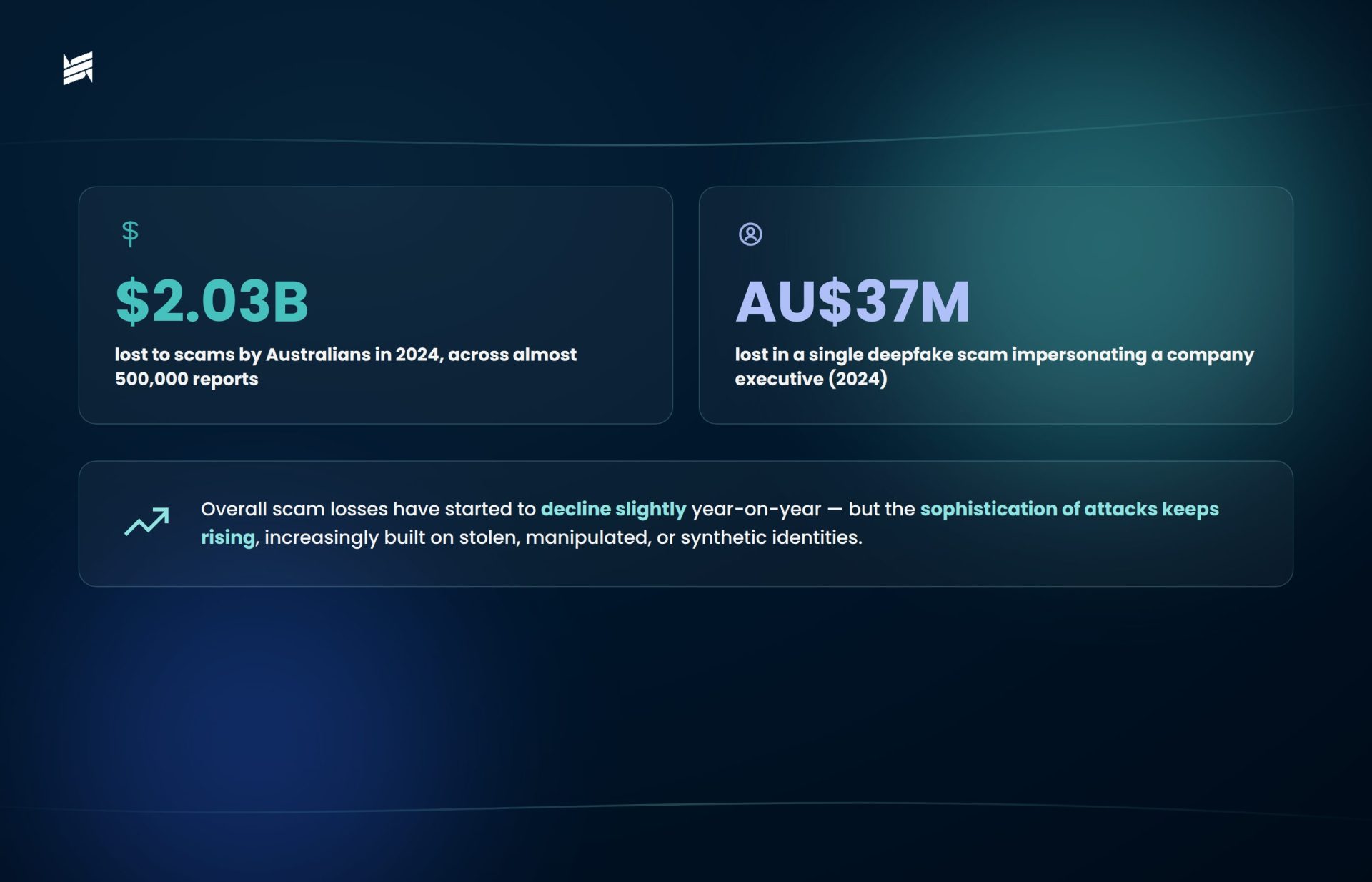
The Scale of Australia’s Identity Fraud Problem
Scams cost Australians a lot of money, and identity-related fraud is a growing share of it.
Why Document Checks Alone Aren’t Enough Anymore
The DVS is built to answer one question well: do these document details match the issuer’s record? It doesn’t answer a different, increasingly important question: is the person presenting that document actually its owner?
That gap is exactly what modern fraud is designed to exploit:
- A stolen or purchased identity can pass a document check cleanly, because the document itself is genuine
- A synthetic or AI-manipulated face can be presented instead of the real applicant, especially where liveness isn’t checked
- Fraud built this way is deliberately engineered to slip past whichever single control a business leans on hardest
This is why Australian guidance increasingly points businesses toward pairing the DVS with the Face Verification Service, or an equivalent biometric liveness check, rather than treating either as sufficient alone.
The DVS confirms the document is real. A biometric check confirms the person in front of the camera is who they claim to be. Together, they close a gap that neither closes on its own.
What Is the Document Verification Service?
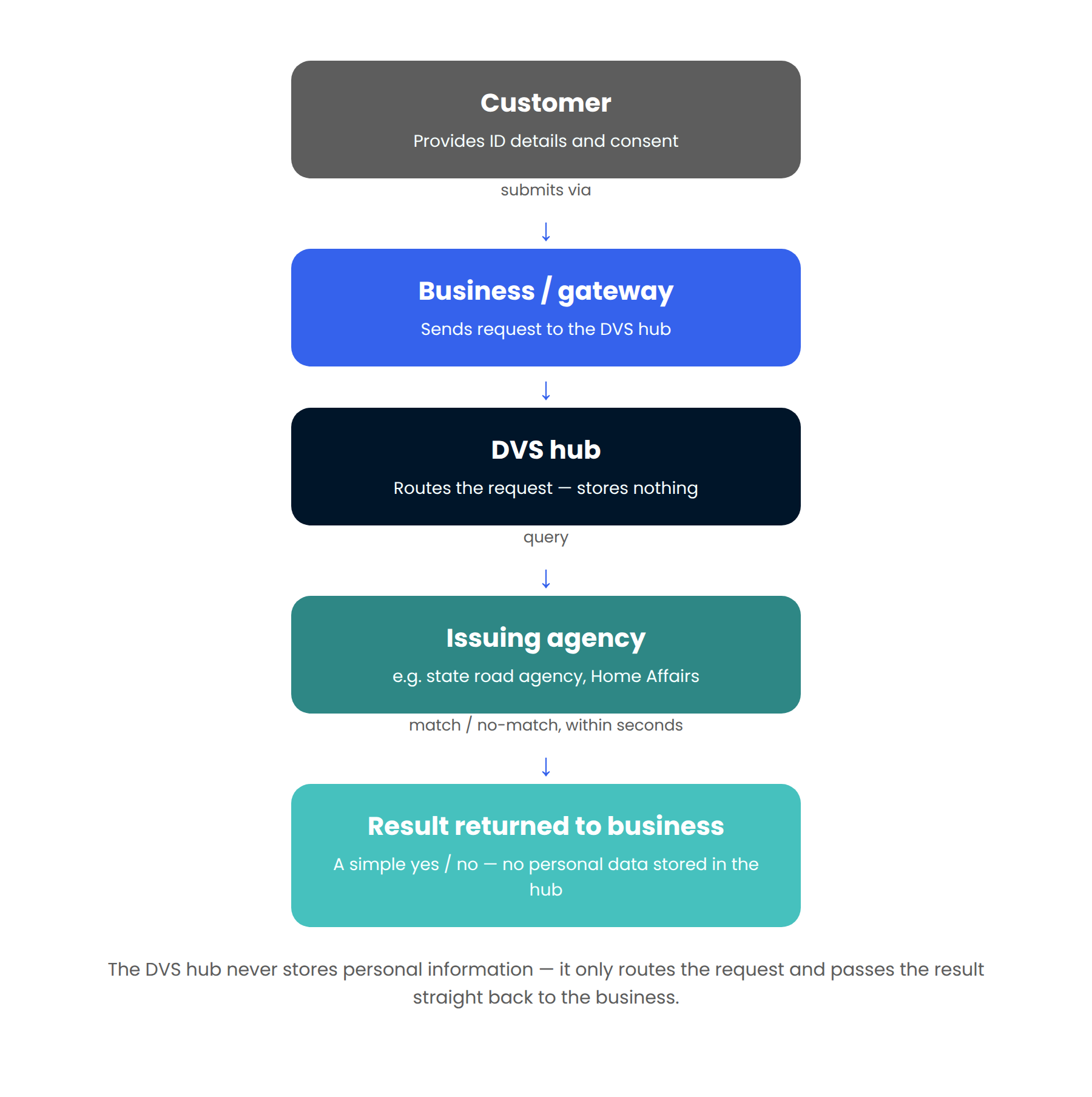
The Document Verification Service is a national online system operated by the Attorney-General’s Department on behalf of Commonwealth, state, and territory governments. Rather than storing a central database of every Australian’s identity details, the DVS acts as a secure routing hub. It takes the details a person has provided, sends a query to the government agency that issued the relevant document, and returns a simple yes or no answer confirming whether those details match the official record.
The service has been operational since 2009 and is now used by more than 3,500 approved government and private sector organisations across Australia and New Zealand, spanning banking, telecommunications, real estate, and online marketplaces.
How the DVS Verification Process Works
The process follows a consistent pattern regardless of which document is being checked.
Which Documents Does the DVS Cover?
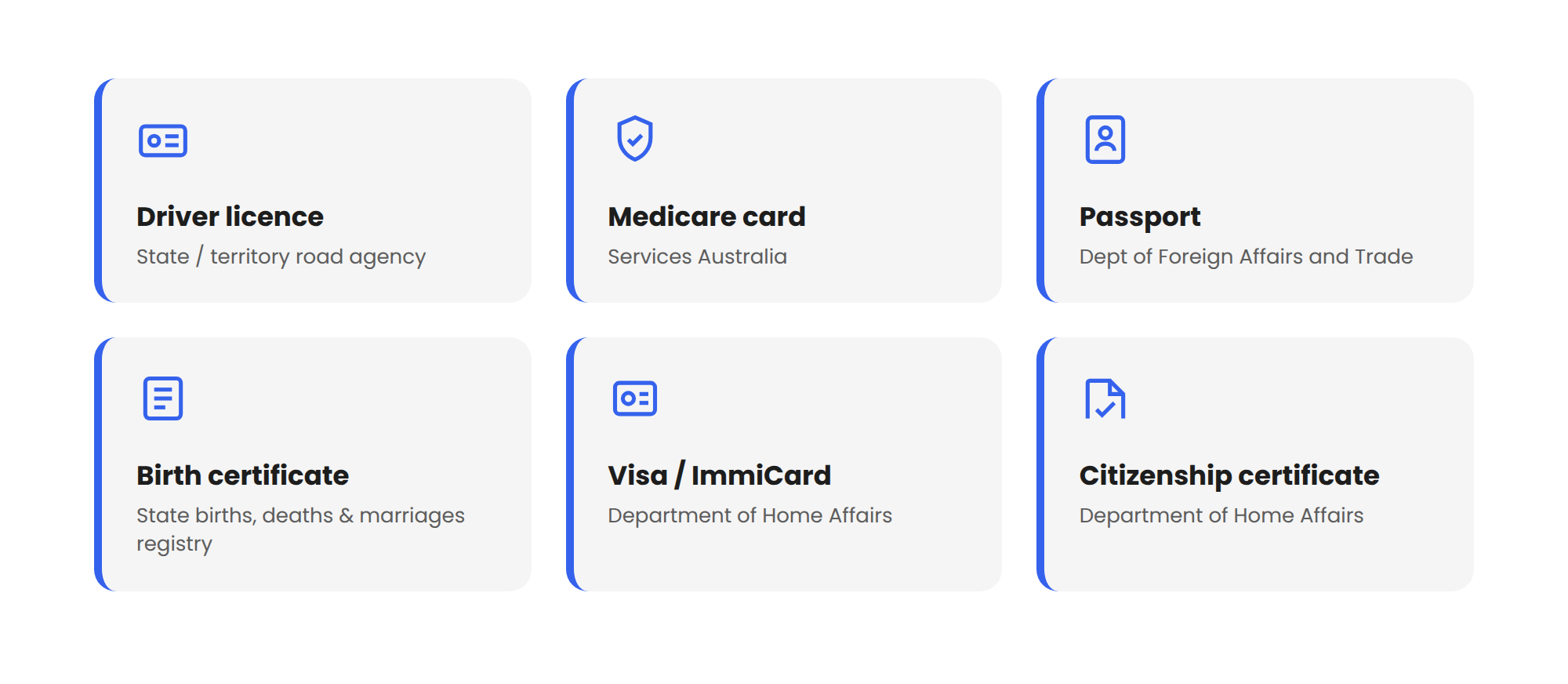
The DVS can check a wide range of Australian-issued identity documents, including driver licences, Medicare cards, passports, birth certificates, visas, ImmiCards, and citizenship certificates. Driver licence checks draw on the National Driver Licence Facial Recognition Solution, which the Attorney-General’s Department manages on behalf of the states and territories, while other documents are checked directly against the systems of the relevant issuing agency.
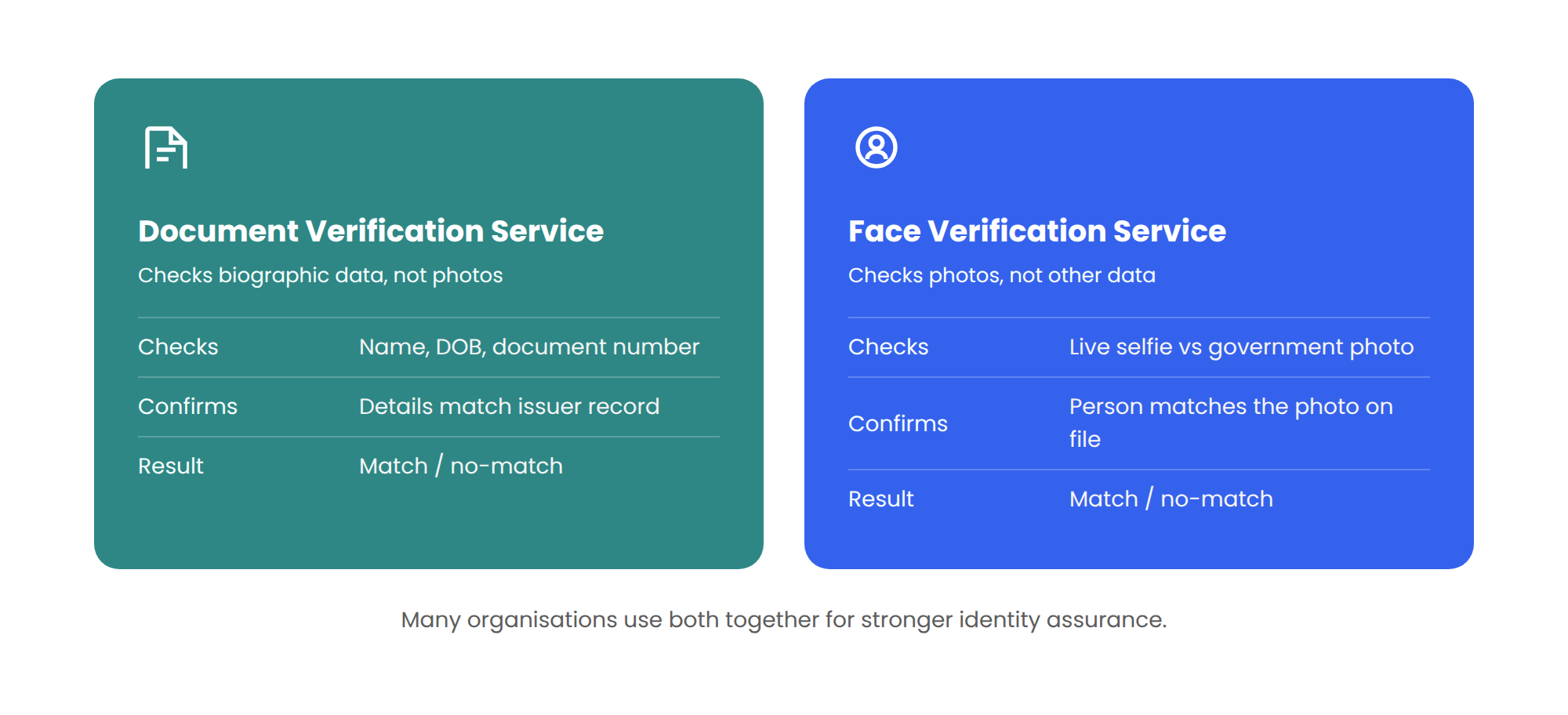
It is worth noting that the DVS confirms biographic data, such as name and date of birth, rather than facial images. A separate service, the Face Verification Service, exists for comparing a photo against government-held images, and the two are often used together for a stronger verification outcome.
Why the DVS Matters for AML and KYC Compliance
Under Australia’s AML and Counter-Terrorism Financing regime, reporting entities must apply a risk-based Customer Due Diligence process before providing designated services. Using the DVS gives a business independent, government-sourced evidence that an identity document is genuine, rather than relying solely on a visual inspection, which strengthens compliance with these obligations and helps reduce identity fraud and identity theft.
Because the DVS returns only a match or no-match indicator and does not retain personal information in the hub itself, it also supports privacy-by-design principles. The Attorney-General’s Department cannot view, edit, or modify the data passing through the system, and use of the service requires the individual’s informed consent.
Limitations to Keep in Mind
The DVS confirms that document details match an official record; it does not, on its own, confirm that the person presenting the document is the rightful holder of it. For that reason, many organisations pair DVS checks with biometric liveness detection or facial comparison as part of a layered verification approach. Coverage can also vary by document type and issuing jurisdiction, so businesses should confirm real-time availability for the specific documents their customers are likely to present.
Frequently Asked Questions
Is the Document Verification Service free to use?
No. Organisations must become approved DVS users, typically through an accredited gateway service provider, and pay transaction-based fees to access the service.
Does the DVS store my personal information?
No. The DVS hub is designed to route verification requests without retaining the personal information that passes through it; records remain with the issuing agency.
Can the DVS check documents issued outside Australia?
Generally no. The DVS checks documents issued by Australian government agencies. Foreign documents typically require a different verification approach, such as document authentication technology or international data sources.
How is the DVS different from the Face Verification Service?
The DVS matches biographic details, such as name and date of birth, against issuer records. The Face Verification Service compares a photo against government-held facial images, and the two are often used together.
Do I need to give consent for a DVS check to be performed?
Yes. Individuals must be informed of the reasons for a DVS check and give their consent before an organisation can verify their details through the service.
Ready to Strengthen Your Identity Verification Approach?
A reliable identity verification process is the foundation of any AML and KYC program. If your organisation is reviewing how it verifies Australian customers, it is worth assessing whether your current onboarding workflow makes full use of government-backed verification sources like the DVS, alongside document and biometric checks, to build a stronger overall picture of identity assurance. Speak with our team about incorporating DVS-based verification into your customer onboarding process today.
0 Comments