
Under Australia’s reformed AML/CTF rules, you must carry out personnel due diligence on anyone you employ or engage to perform roles relevant to your AML/CTF obligations, both before they start and on an ongoing basis. The depth of the checks should match the risk and seniority of the role. You must also give those people AML/CTF training that suits their role.
This guide explains which roles are covered, what checks fit a small firm, how training fits in, and whether you should screen your own staff against PEP and sanctions lists. It is general information, not legal advice.
Which roles are covered
AUSTRAC says you must conduct personnel due diligence and provide training to people who perform, or will perform, roles relevant to your AML/CTF obligations, and that this applies to any person you employ or engage, including contractors. It suggests mapping your obligations to the roles and responsibilities that support them.
In a small firm, that typically includes:
- the AML/CTF compliance officer
- principals or partners who approve the AML/CTF program or high-risk clients
- staff who onboard clients, collect documents and run screening checks
- staff who handle client money or transactions
- anyone who would notice and escalate suspicious activity
AUSTRAC also expects you to identify which of these roles are high risk, so that checks and training can be tailored to them.
When to carry out personnel due diligence
AUSTRAC’s guidance says you must conduct personnel due diligence:
- before you employ or engage the person
- on an ongoing basis during their employment or engagement
For newly regulated businesses, AUSTRAC expects you to check current personnel too, by considering what due diligence you have already done for them and identifying any additional checks that may be needed.
What checks fit a small firm
AUSTRAC’s program guidance expects your policies to set out how you assess the integrity of personnel, as well as their skills and knowledge for the role. The table below is an illustrative way to scale checks to risk. Your program decides what applies.
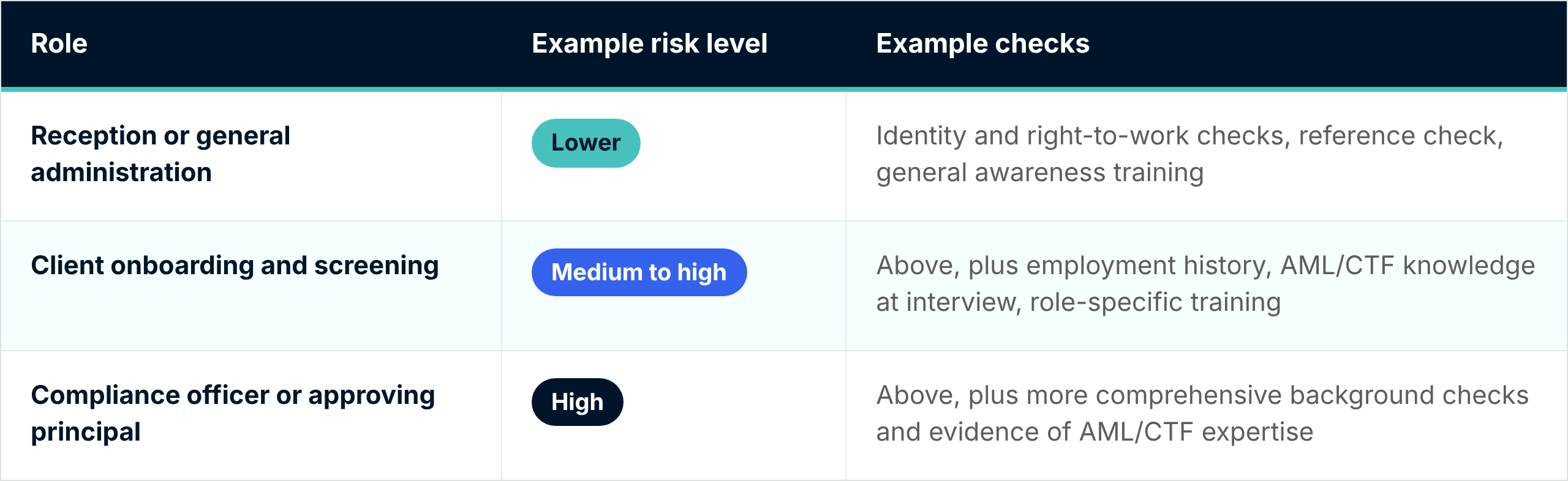
AUSTRAC’s examples describe a professional services firm that applies more thorough checks and extra targeted training for high-risk roles, and a real estate agency that fell short by mapping roles but not identifying which ones were high risk.
PERSONNEL DUE DILIGENCE IN A SMALL FIRM
Match the checks and training to the role.
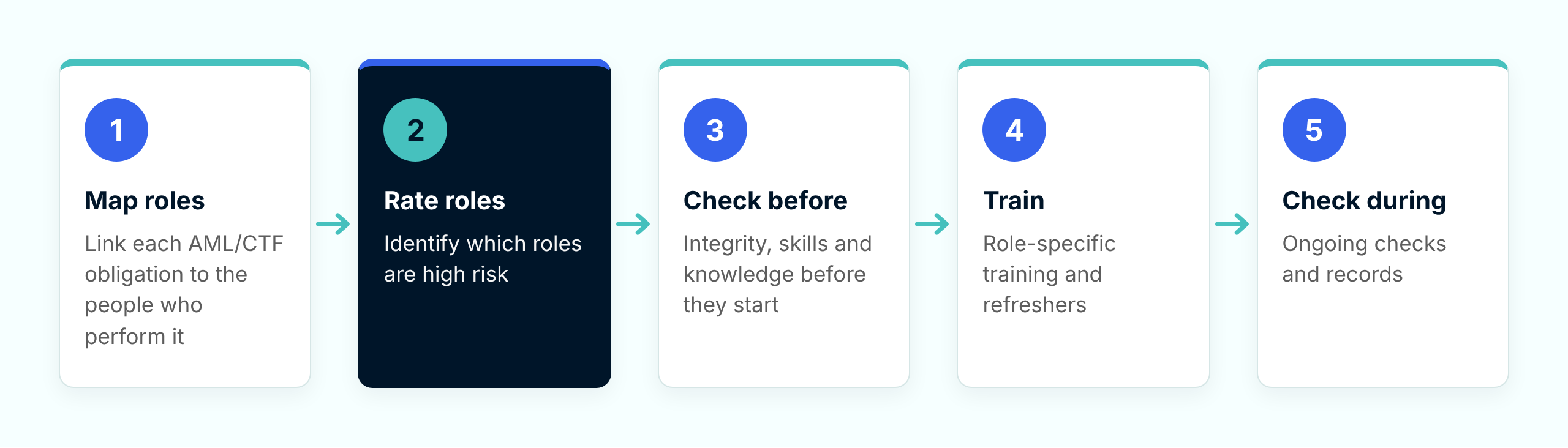 Figure 1. Illustrative personnel due diligence cycle. Your AML/CTF program sets the detail.
How training fits in
Training is part of the same obligation. AUSTRAC’s guidance says training must be ongoing, tailored to different roles and their risks, and recorded. It suggests delivering training:
- to customer-facing personnel every 12 months
- to personnel responsible for onboarding, transaction monitoring or other enhanced CDD roles every 12 months
- to other personnel not in AML/CTF roles at onboarding, as general awareness training
AUSTRAC also expects you to monitor whether training works, for example by checking whether people retain what they learnt and apply it. A simple training register with completion dates and next-due dates covers most of this for a small firm.
Should you screen your own staff against PEP and sanctions lists?
Screening staff is a sensible part of integrity checks for higher-risk roles, and there is a sanctions reason to do it more widely. Australian sanctions laws make it an offence to make an asset available, directly or indirectly, to a person or entity designated for targeted financial sanctions. Paying wages or fees to a designated person would involve making assets available to them.
A PEP result for a staff member is not a reason to refuse employment. Like a PEP client, it is a fact to consider in the context of the role, for example whether the person could be exposed to conflicts of interest.
What to record
Keep records that show what you checked, when, and the outcome, for each person in an AML/CTF role, together with training completion records. AUSTRAC’s program guidance expects you to keep records of personnel suitability that are reasonably necessary to demonstrate compliance.
Frequently asked questions
Does personnel due diligence apply to contractors?
Yes. AUSTRAC says the obligations apply to any person you employ or engage to perform AML/CTF-relevant roles.
Do I need to check staff I employed before Tranche 2?
AUSTRAC expects newly regulated businesses to consider the checks already done for current personnel and identify any additional checks needed.
How often must staff be trained?
Your program sets the frequency. AUSTRAC suggests every 12 months for customer-facing staff and those in onboarding or enhanced CDD roles, and general awareness training at onboarding for others.
Is a police check mandatory?
AUSTRAC expects you to assess integrity in a way that suits the risk and seniority of the role. Your program should set which background checks apply to which roles.
Should I screen employees for sanctions?
It is a sensible step. Paying a designated person would involve making assets available to them, which Australian sanctions laws prohibit.
How NameScan can help
NameScan lets small firms screen individuals against PEP, sanctions and adverse media data on a pay-as-you-go basis, which can form part of integrity checks for new and existing staff in AML/CTF roles. Each check produces a dated result that you can keep with your personnel records.
Add screening to your staff checks
Screen new and existing staff in AML/CTF roles and keep a dated record with your personnel files.
0 Comments